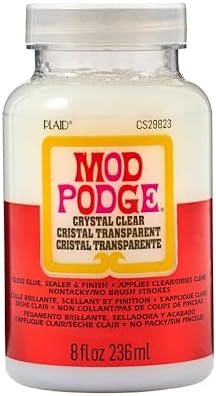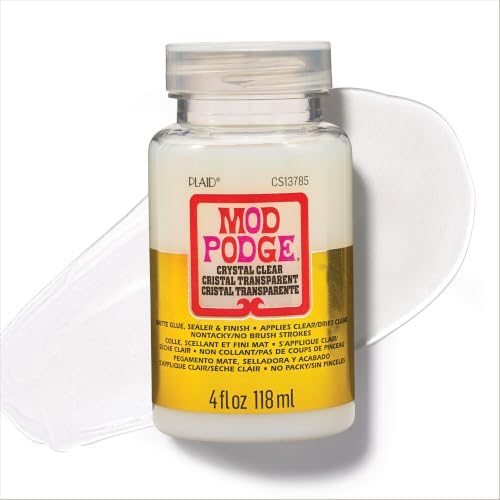
Thin coats of decoupage glue, flat paper, no brush marks
Nearly every wrinkle we are asked about is a decoupage glue applied too thick. Thin coats fix more projects than any change of formula.
Wrinkles are too much medium, not bad paper
Paper wrinkles because it swells where it is wet and not where it is dry. A heavy coat soaks one area, that area expands, and the sheet buckles. A thin, even coat wets the whole sheet at once and it lies flat.
Thinner paper needs less again. Napkins and tissue want the lightest pass you can manage, and they are easier if you brush the medium onto the surface and lay the paper into it rather than painting the paper itself.
Work from the middle out
Air has to have somewhere to go. Press from the centre of the sheet towards the edges with a finger, a brayer or a smoothing tool and the bubbles walk out ahead of your hand. Starting at a corner traps them in the middle with nowhere to escape.
If a bubble sets anyway, a pin prick and a press while the medium is still soft usually closes it.
Brush marks and how to lose them
Ridges are the brush dragging through a coat that has already started to set. Load the brush properly, go in one direction, and stop going back over an area that has begun to tack up. A foam applicator leaves fewer marks than bristles.
For a genuinely flat finish, build two or three thin coats, alternate the direction of each, and sand very lightly between them with fine paper on the formulas that allow it. Or skip the brush entirely and use an aerosol sealer for the final coat.
Decoupage glue and sealer at a glance
Wrinkle causes
- too much medium
- pooled edges
- soaked paper
Paper that behaves
- tissue
- napkin
- scrapbook paper
- photocopy
Paper that fights
- thick card
- glossy photo
- newsprint
Brush to use
- flat synthetic
- foam applicator
- soft bristle
Work order
- middle out
- one panel
- overlap lightly
Smoothing
- brayer
- squeegee
- credit card
- clean finger
Between coats
- 20 minutes
- light sanding
- wipe dust
Lose brush marks
- thin coats
- final spray
- fine sanding
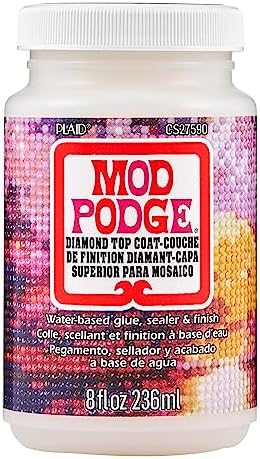
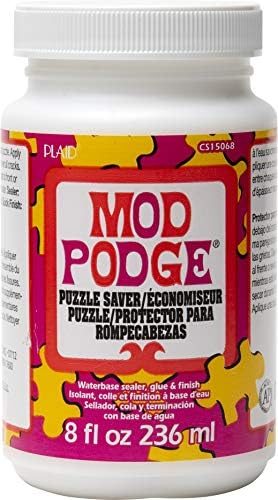
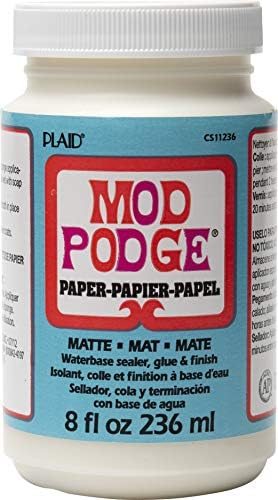
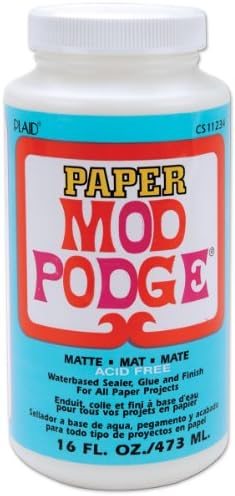
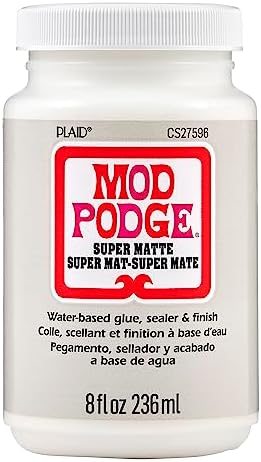
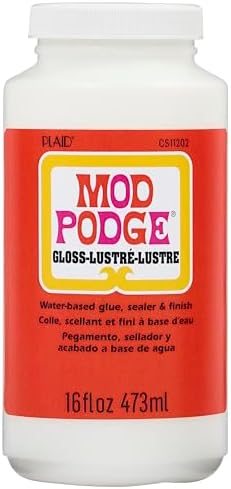
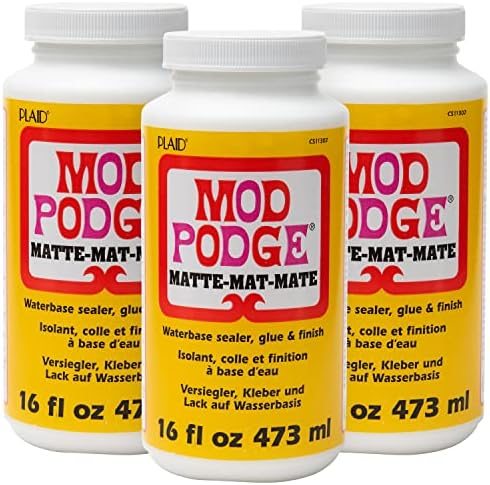
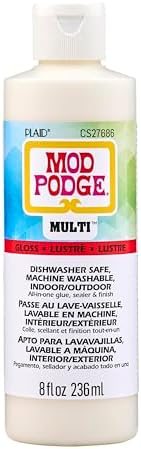
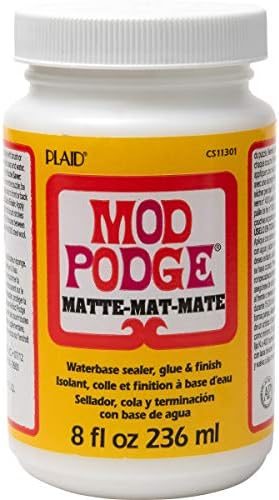
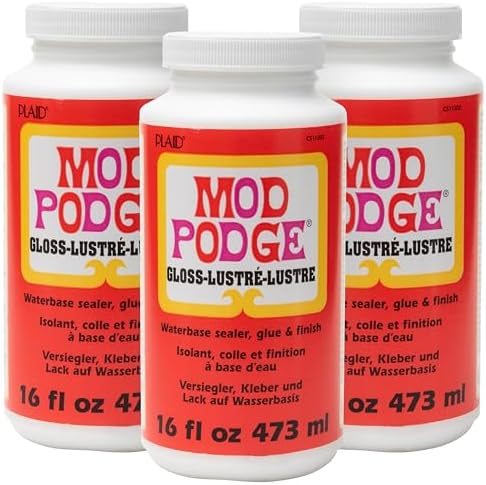
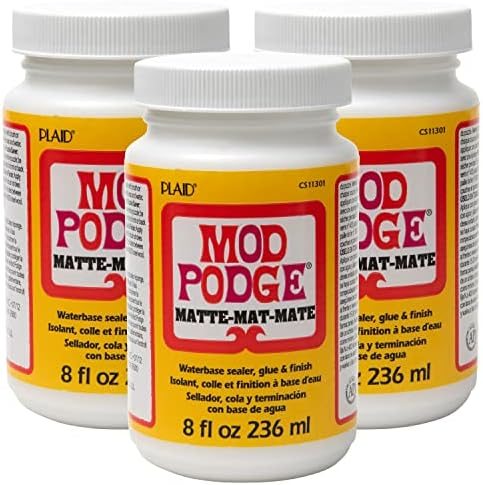
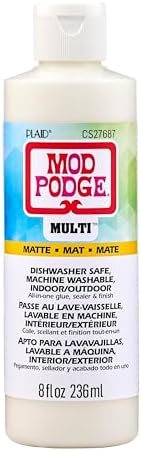
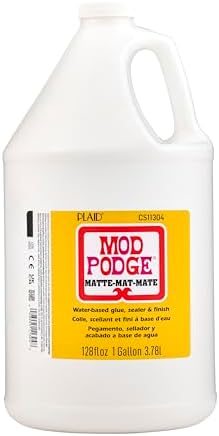
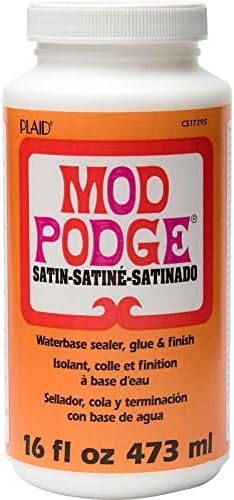
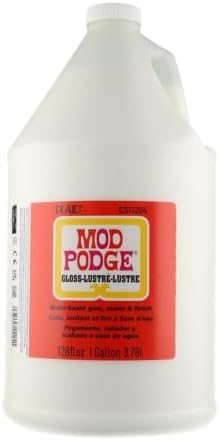
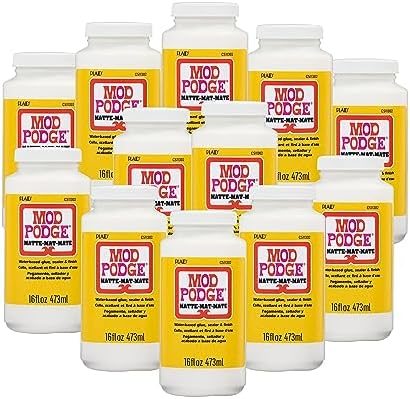
Every Mod Podge decoupage glue in the line goes on the same way: thin, from the middle out, with the brush barely loaded. That is true for the matte and gloss bottles, for the fabric one, and for the outdoor one. The variety of formulas changes what the cured film does; it does not change how a coat should be applied.
A crafter who gets this right stops thinking about technique altogether and gets on with making things. Thin coats dry clear, sand smooth and leave a durable finish on wood, canvas or paper without a single ridge. It is the handiest skill in decoupage and it takes about one evening of creative practice to pick up.
Next from the bench: Wood, glass and fabric: three different jobs. Or go straight to the shelves and pick a bottle.
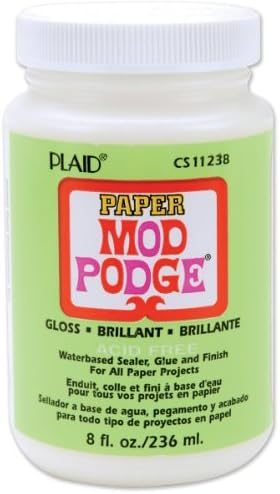
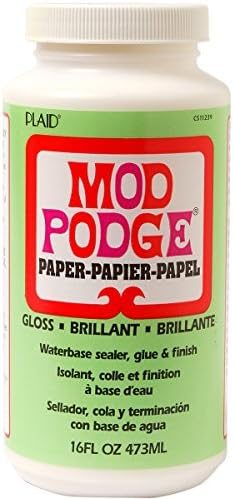
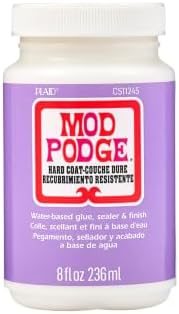
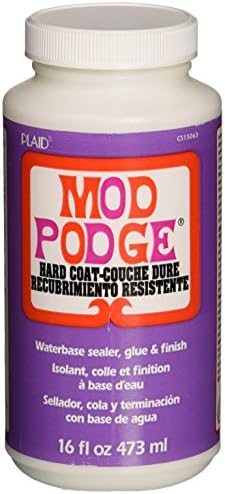
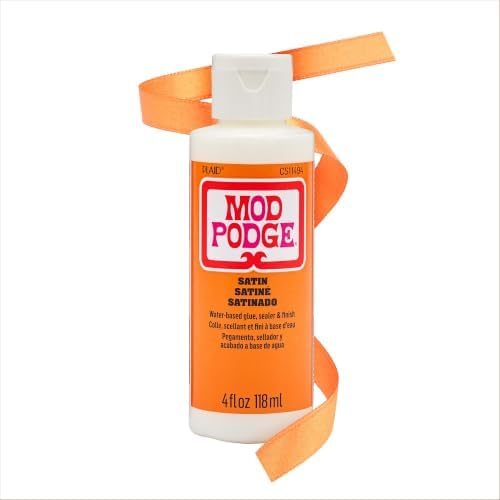
The decoupage glue and sealer this one is about